
How to clean it the right way (and what to avoid so you don’t ruin the finish)
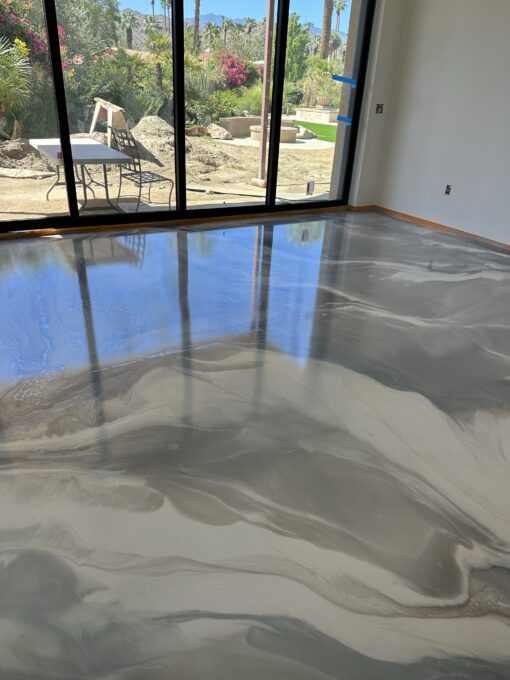
If you have a metallic epoxy floor with a urethane topcoat, you already know it’s one of the most striking finishes you can install in a home or business. Metallic epoxy creates a deep, dimensional look that resembles liquid marble, and the urethane topcoat adds long-term protection and can be applied in a gloss, satin or matte finish.
To keep that high-end appearance, it’s important to clean it correctly. Metallic floors can show residue, streaks, and micro-scratches more easily than other flooring types—especially in high-traffic areas. The good news is that maintenance is simple once you know what to do (and what to avoid).
Below is the exact cleaning and maintenance routine we recommend for interior metallic epoxy floors protected with urethane.
Why the Urethane Topcoat Matters
Your metallic epoxy design layer is sealed under a high-performance urethane topcoat. Urethane is a popular finish for interior metallic floors because it improves abrasion resistance, enhances stain protection, and adds depth and clarity to the metallic effects.
However, urethane can be sensitive to harsh cleaners and abrasive tools. Incorrect cleaning products can dull the finish over time or leave a cloudy appearance. That’s why using the right process is more important than using stronger chemicals.
Step One: Remove Grit Before You Mop
The most important maintenance step is removing dirt and grit before damp mopping. Dust and sand act like fine sandpaper and are the leading cause of micro-scratches that slowly reduce gloss.
For daily or as-needed cleaning, use a microfiber dust mop or a soft broom. If you prefer vacuuming, use a hard-floor setting and avoid beater brushes.
Keeping grit off the surface is the easiest way to protect the topcoat long term.
Weekly Cleaning: The Right Way to Mop a Metallic Epoxy Floor
After dry cleaning, a gentle damp mop is all you need for routine maintenance.
Use warm water and a pH-neutral cleaner, or a small amount of mild dish soap. A simple mix of one gallon of warm water with one to two teaspoons of a mild dish soap is usually sufficient.
Use a microfiber mop pad and avoid abrasive scrub pads or brushes. If you use soap, follow with a quick rinse mop using clean water to prevent residue buildup. Residue is one of the most common reasons metallic floors look streaky or hazy even when they are clean.
For best results, allow the floor to air dry or dry it with a microfiber towel to maintain a streak-free appearance.
Spot Cleaning Spills and Stubborn Areas
Urethane topcoats are designed to be stain-resistant, but it’s still best to clean spills promptly for the most consistent long-term appearance.
For small spills, wipe the area with a damp microfiber cloth. For sticky spots or dried drips, apply your warm water and mild cleaner mix and allow it to sit for two to five minutes. Then wipe gently with a microfiber cloth, rinse with clean water, and dry the area.
This method will remove residue without damaging the finish.
Removing Shoe Scuffs Without Damaging the Finish
Shoe scuffs are normal in homes and businesses, especially in entryways or hallways. In most cases, scuffs will wipe away using a microfiber cloth and your mild cleaner mix.
For more stubborn marks, you can lightly use a soft white non-scratch pad. Always work gently, rinse afterward, and dry the area.
Avoid melamine sponges (commonly known as Magic Erasers). While they seem harmless, they are abrasive and can cause dull spots on high-gloss urethane finishes.
Cleaning Products and Tools to Avoid
One of the biggest causes of premature dulling is using the wrong cleaners.
Avoid acidic cleaners such as vinegar. Avoid bleach and ammonia-heavy products. Avoid degreasers or citrus solvent cleaners. Avoid oil soaps. Steam mops are not recommended. Abrasive pads, scrub brushes, and melamine sponges can all reduce the sheen of the urethane finish.
If you have questions about a specific product, it’s best to test it in a small, hidden area first or contact us for approved cleaning recommendations.
How to Protect the Floor and Prevent Wear Patterns
Proper cleaning helps, but prevention is what keeps your floor looking new.
Use walk-off mats at exterior doors to reduce grit tracked onto the surface. Use mats in front of sinks or other high-use areas. When choosing mats, avoid rubber-backed mats unless they are labeled as safe for coated floors, as some rubber backings can stain or react with coatings.
Use felt pads under furniture legs and avoid dragging furniture across the floor. If you have pets, keeping nails trimmed will help reduce fine scratching, especially on glossy finishes.
If the Floor Looks Cloudy or Dull
If your floor starts to look hazy, the cause is often cleaner residue rather than damage.
Try mopping once with warm water only, then a second time with clean water. Afterward, dry the surface with a microfiber towel. Many haze issues are simply buildup and will disappear after removing residue.
If the floor still appears dull after cleaning properly, it may be normal wear in traffic areas over time. In some cases, a maintenance recoat may be recommended to restore the original sheen.
Recommended Cleaning Supplies
For best results, use microfiber dust mops and microfiber mop pads. Use pH-neutral cleaners or mild dish soap in small amounts. Keep a soft white non-scratch pad available for occasional spot cleaning.
Avoid abrasive tools, harsh chemicals, and cleaners that leave residue behind.
